The ecstatic swoon

As Stendhal knew, the reason for art is to make you feel. Do not try to grasp the artwork: allow it to grasp you instead
https://aeon.co/essays/what-stendhal-says-about-the-purpose-and-promise-of-art
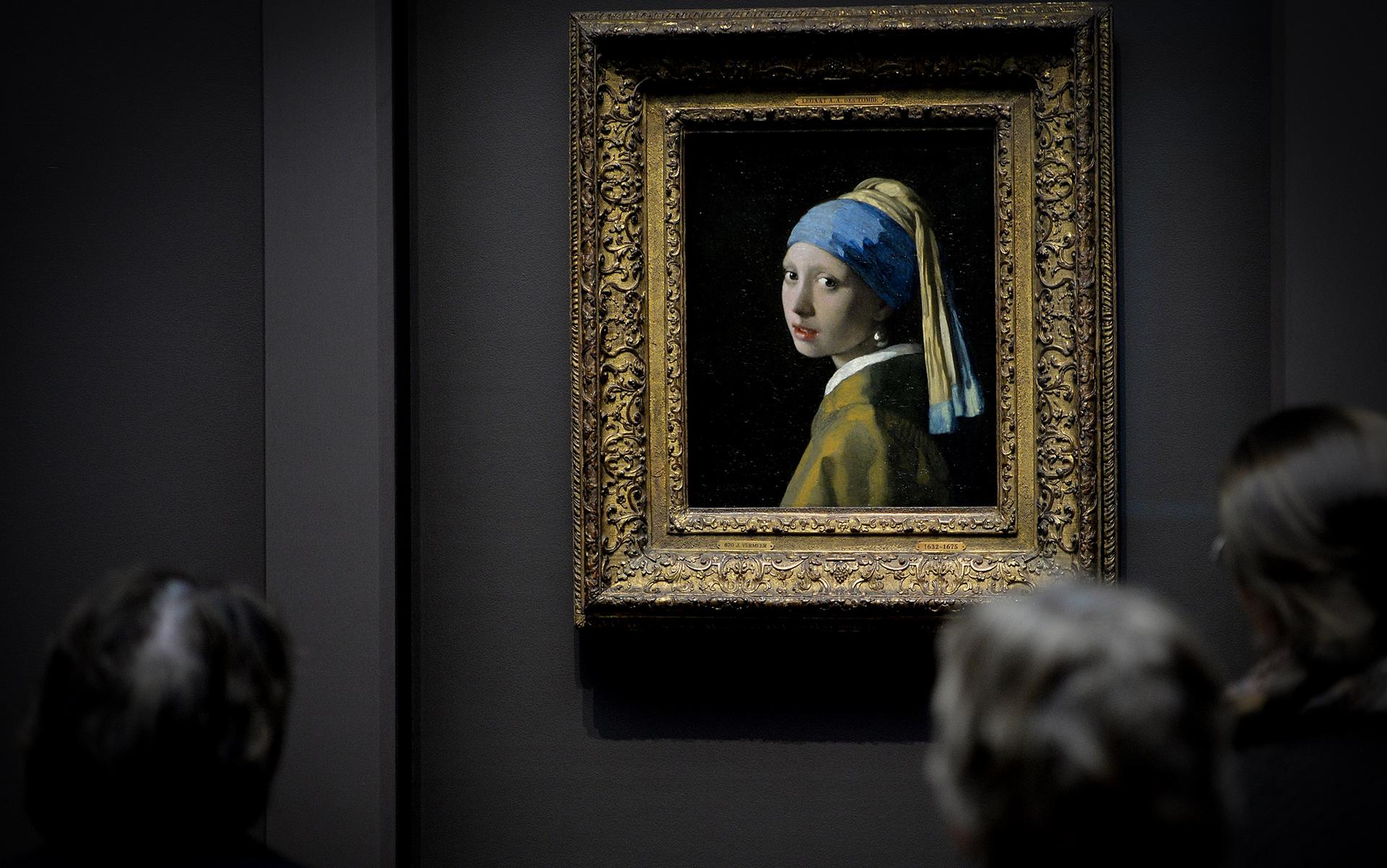
On 22 January 1817, Henri Beyle’s heart was beating fast. Not because he had braved the robber-infested road from Bologna, but because he was now approaching the city of Florence. Glimpsing ‘like some darkling mass’ the monumental dome, conceived by Filippo Brunelleschi, sitting atop the Santa Maria del Fiore, this first sight of the Tuscan city dazzled him. ‘Behold the home of Dante, of Michelangelo, of Leonardo da Vinci,’ the 30-something Frenchman thought to himself. ‘Behold then this noble city, the queen of medieval Europe! Here, within these walls, the civilisation of mankind was born anew.’ Overwhelmed by the historical associations evoked by the city, Beyle later wrote in a travelogue:

Perhaps this emotional turbulence helps to explain the odd event that occurred soon after. Once Beyle passed through the city gates, he left his carriage and plunged into Florence. Though he had never set foot in the city before that day, he had studied maps with such intensity that he had internalised them. Without a local guide or a moment’s hesitation, Beyle made his way to the Basilica di Santa Croce. The city’s largest Franciscan church, the Santa Croce boasted stunning works of art, including Giotto’s fresco
The Coronation of the Virgin with Angels and Saints, as well as funerary monuments to celebrated residents of Florence, including Dante, Galileo, Machiavelli and Michelangelo.
 The Coronation of the Virgin with Angels and Saints (Baroncelli Polyptych) (after 1328) by Giotto. Courtesy Santa Croce Opera
But rather than seek out the Giotto, Beyle instead wandered through the ‘mystic dimness’ that filled the church and asked an obliging friar to open a locked chapel. On its ceiling was (and remains) a fresco of sybils by Baldassare Franceschini, a relatively obscure late-Baroque painter better known as Il Volterrano. Sitting down on a stool, Beyle leaned back and rested his head on a desk behind him, gazing at the sybils floating above him. There soon followed, he later recalled:

 Coronation of the Virgin (1653-61) by Il Volterrano, in the Niccolini Chapel in the north transept of the Basilica of Santa Croce. Courtesy Santa Croce Opera
Beyle does not say how long he stared up at the fresco, but it was long enough to reach ‘that supreme degree of sensibility where the
divine intimations of art merge with the impassioned sensuality of emotion.’ Upon leaving the church, he wrote: ‘I was seized with a fierce palpitation of the heart …; the well-spring of life was dried up within me, and I walked in constant fear of falling to the ground.’
snip
