Welcome to DU!
The truly grassroots left-of-center political community where regular people, not algorithms, drive the discussions and set the standards.
Join the community:
Create a free account
Support DU (and get rid of ads!):
Become a Star Member
Latest Breaking News
Editorials & Other Articles
General Discussion
The DU Lounge
All Forums
Issue Forums
Culture Forums
Alliance Forums
Region Forums
Support Forums
Help & Search
World History
Related: About this forumLascaux cave paintings: Huge replica of Palaeolithic site to open in France in December
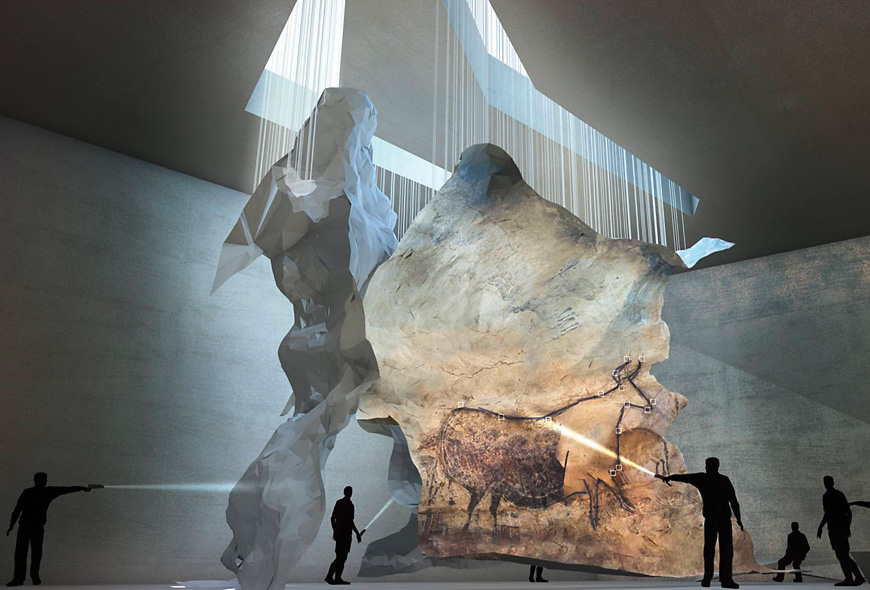
http://www.ibtimes.co.uk/lascaux-cave-paintings-new-replica-prehistoric-wonders-open-december-2016-1547525A new reproduction of the famous prehistoric Lascaux cave in France will open its doors in December 2016. Lascaux IV will be the most complete replica of the cave to date, close to the original site and recreating almost all of the 900 square metres of Palaeolithic paintings decorating the rocks of the original shelter.
Located in Dordogne, South of France, the Lascaux cave is one of the most important archaeological finds of the 20th century. It was discovered in 1940 by chance, not by an experienced team of scientists, but by an 18-year-old boy named Marcel Ravidat, with his dog and three of his friends.
The cave displays some of the world's richest collection of paintings from the Palaeolithic era, with more than 2,000 figures of men, animals and abstract symbols represented. Shades of red, yellow and black dominate as the paintings were created using mineral pigments. It was being damaged by carbon dioxide, heat and humidity produced by the visitors. Since then, only a limited number of scientists is allowed to enter, for short periods, for research purposes.
In 1983, Lascaux II, a partial reproduction of the cave, was opened 200m away to allow the public to admire some of the artwork without damaging the originals. However, not all the rooms were recreated. Visitors were only shown a replica of the most impressive parts of the rock shelter, the great Hall of Bulls, with the famous paintings of stags, bulls and horses, and the Painted Gallery.
Located in Dordogne, South of France, the Lascaux cave is one of the most important archaeological finds of the 20th century. It was discovered in 1940 by chance, not by an experienced team of scientists, but by an 18-year-old boy named Marcel Ravidat, with his dog and three of his friends.
The cave displays some of the world's richest collection of paintings from the Palaeolithic era, with more than 2,000 figures of men, animals and abstract symbols represented. Shades of red, yellow and black dominate as the paintings were created using mineral pigments. It was being damaged by carbon dioxide, heat and humidity produced by the visitors. Since then, only a limited number of scientists is allowed to enter, for short periods, for research purposes.
In 1983, Lascaux II, a partial reproduction of the cave, was opened 200m away to allow the public to admire some of the artwork without damaging the originals. However, not all the rooms were recreated. Visitors were only shown a replica of the most impressive parts of the rock shelter, the great Hall of Bulls, with the famous paintings of stags, bulls and horses, and the Painted Gallery.
Excellent write-up and beautiful photographs at the link.
2 replies
 = new reply since forum marked as read
Highlight:
NoneDon't highlight anything
5 newestHighlight 5 most recent replies
= new reply since forum marked as read
Highlight:
NoneDon't highlight anything
5 newestHighlight 5 most recent replies
= new reply since forum marked as read
Highlight:
NoneDon't highlight anything
5 newestHighlight 5 most recent replies
Lascaux cave paintings: Huge replica of Palaeolithic site to open in France in December (Original Post)
BlueMTexpat
Mar 2016
OP

RegexReader
(428 posts)1. This is awesome!
 ?w=736
BlueMTexpat
(15,701 posts)2. I've not yet made it
to Lascaux - it's still on the Bucket List.
But earlier this year, I was able to see a scaled-down exhibition of Lascaux locally. Even that was awesome!